

Tax returns and important deadlines to remember
Do you know when to file a tax return? Or when can you ask for a postponement? And do you know what the marketing year is and how the deadline for filing a tax return is calculated in this case?
Čo v článku nájdete:
- Who has to file a tax return?
- When does a natural person have an obligation to submit a tax return?
- Are there exceptions for natural persons?
- What about legal entities?
- The most important dates you should know about your tax return
- When is the tax due? What about overpayment? Time limit for payment of tax and refund of overpayment
- How is the tax paid?
- What if you pay later?
- When is the tax office returning the overpayment?
- How to file a tax return?
- Do you know what form you need?
- Conclusion
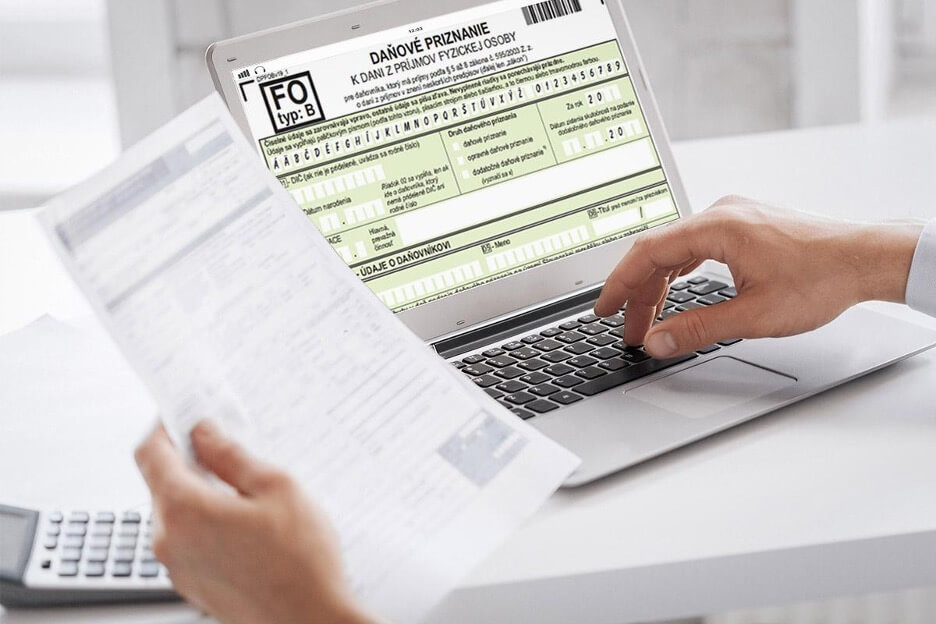
In this article we will offer you an overview of the most important obligations and deadlines for tax returns so that you have everything in one place and do not miss anything. We will also look at when there is a tax return obligation at all, how the tax is paid or when you can expect a tax overpayment. But much more. Read more and learn all important information about the tax return. Every year comes the time when it is time to focus on your finances and prepare a tax return. Many view this process as an obligation only, but in fact it is an excellent opportunity to obtain a clear overview of their income and expenditure and to use all available tax reductions and deductions. Proper preparation will enable you not only to fulfil your legal obligation but also to better plan personal or corporate finances. The tax return concerns various groups of employees, entrepreneurs, businessmen and business owners. Each type of confession has its specifics and rules, and therefore it is important to know which documents are needed, but especially When to administer. In the following sections of the article, we will look at who has an obligation to file a tax return and, in particular, on dates that you should definitely write on your calendar.

Source: Canva
Who has to file a tax return?
To begin with, it is important to know who is obliged to file a tax return. In Slovakia two main groups are distinguished: natural persons and legal persons.
When does a natural person have an obligation to submit a tax return?
A natural person shall be required to submit a return where the amount of his total taxable income exceeds the fixed amount for the tax year in question. This amount is updated annually, for Tax year 2025 is set to € 2876,90.
Thus, if in the current year (2025) you exceed this amount of income, you will have to file a tax return for the following year (2026).
Any income subject to tax and not exempt from it shall be included in the total taxable income. This income includes income from abroad in the case of taxpayers with unlimited obligations, i.e. those who reside, reside or reside in the territory of the Slovak Republic for more than 183 days per year. A tax return must also be made if a natural person is a businessman, even if he has a tax loss.
Are there exceptions for natural persons?
Yes. If you are a natural person, you do not have to file a tax return if you have only earned income from dependent employment (employment) in the territory of the Slovak Republic for the tax period and have asked your employer to carry out the annual accounts. In addition, taxpayers who only have the following revenues are exempted:
- This appropriation is intended to cover expenditure relating to:
- income from employment in the European Union institutions, if it has already been demonstrably taxed in favour of the EU budget.
Here is a simple summary:
If you are a natural person, an obligation to submit a tax return to you (in 2026) will arise if you fulfil at least one of the following conditions:
- your taxable income for 2025 exceeds € 2876,90,
- you will be liable for tax loss even if the income did not exceed that threshold;
- you have income which is not exempt or not taxed by deduction (for example rental income, trade income, capital income, foreign income).
However, if you only have income from dependent work (employment) and your employer asks for annual clearance, you do not have to file a tax return.
Attention However, if you also have other income, such as renting an apartment or foreign income, the obligation to submit a return arises.
What about legal entities?
For legal persons, they are obliged to submit a tax return, regardless of the amount of income.
Exemptions concern categories of civic associationswhich only had non-tax revenue, withholding tax or exempt income. This also applies to budgetary and contribution organisations which only have exempt revenues. Otherwise, all companies, be they limited companies or limited companies, etc., have an obligation to submit a tax return even if they have not recorded any income for the previous taxable period.

Source: Canva
The most important dates you should know about your tax return
If you have found that you are subject to a tax return, the next step is to monitor the deadlines. It depends on whether everything goes smoothly. The deadline for filing a tax return always falls to 31 March. A tax return for the previous tax period shall be submitted in each year. Thus, in 2025 tax returns for 2024 are submitted.
If 31 March falls on Saturday or Sunday, so the deadline for filing the tax return is postponed to the next working day. So if 31 March falls on Saturday, the deadline is postponed to 2 April, if for Sunday, there is a deadline 1 April.
However, the taxpayer may extend the deadline for filing a tax return (request for deferral). There are two possible delays:
- Three months extension This applies to all taxpayers, natural and legal persons who have applied for an extension of the deadline until 31 March. The last day for filing a tax return is in this case By 30 June.
- Six months extension This applies to taxpayers who have income from abroad. The deadline for filing a tax return in this case until 30 September.
Extension of the deadline for submission of the DP shall always be notified to the competent tax authority, at the latest By 31 March. In the case of legal entities, there may still be a situation where the firm does not have a calendar year, but so called. marketing year (e.g. from 1 July 2024 to 30 June 2025). Tax return in this case is filed by the company within 3 months of the end of the marketing year. In this particular case, the deadline would therefore be 30 September 2025.
When is the tax due? What about overpayment? Time limit for payment of tax and refund of overpayment
Until when to pay the tax?
The deadline for payment of the tax is always the same as the deadline for filing the tax return. So if you submit DP in due time (March 31st), you must also pay the tax by this date. If you use the deferral (until 30 June or 30 September), the deadline for payment of the tax is also postponed. Simply put, you have exactly as much time to pay the tax as you can to file a return.
Source: Canva
How is the tax paid?
Each taxpayer has a special income tax account. It is called the so-called OÚD assigned by the tax office. Payment can be made via internet banking, QR code, post order or transfer, and the variable symbol is given by birth number (for natural persons) or IČO (for companies).
What if you pay later?
In the event of late payment, the tax office shall levy interest on late payment which increases with the number of days of delay.
When is the tax office returning the overpayment?
If the tax return gives you an overpayment, the tax office is obliged to return it. The refund deadline is 40 days after the deadline for filing the tax return. So if you’ve filed the DP earlier, that doesn’t mean the money’s coming right away. Time limits shall always be calculated from the last day of the legal period. Remember, if you want to get the overpayment, in the tax return must tick the appropriate box I request a refund of the overpayment. If you do not tick the box, the Office will use the overpayment to cover any arrears or keep it registered for the next period.
How to file a tax return?
Now that you know you have to file a tax return and you know the deadlines, the next question arises: How’s that?
Slovak legislation allows you to file a tax return in several ways. Obligations vary depending on whether you are a natural or legal person. All entrepreneurs, self-employed persons and legal entities are obliged to submit a tax return Electronic. It is served via the Financial Report portal.
Tip: The financial report offers an electronic form that can automatically pre-fill some of the data, which makes it easier to complete the tax return.
You can also file a tax return personally at the tax office. However, this is only possible for non-workers.
The last option is to file a tax return by mail. This also applies only to natural persons, non-workers. It is recommended to send DP always recommended and to keep the delivery confirmation.
Source: trend. en
Do you know what form you need?
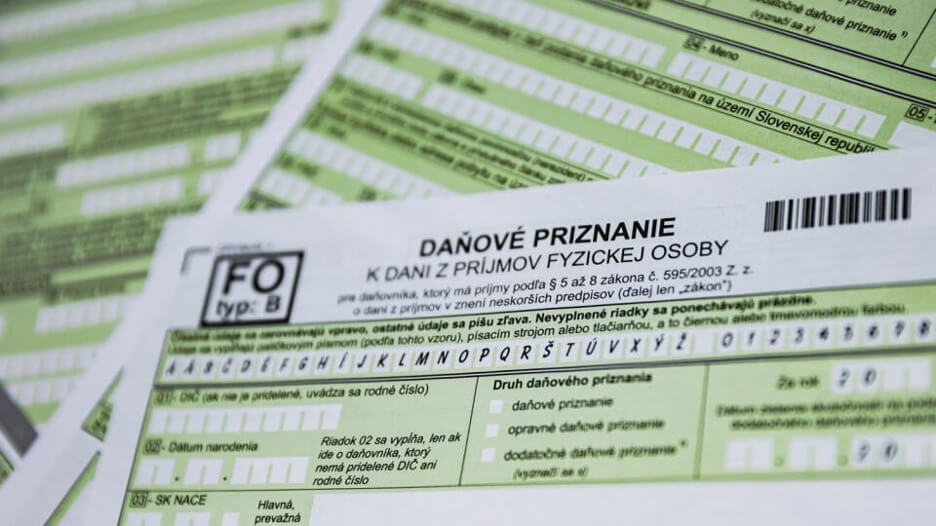
When selecting the right form, it depends on what resources you have revenue from. We distinguish between Type A and Type B tax returns.
Type A tax return is intended for taxpayers who in the previous tax year had exclusively income from dependent employment, i.e. employment in Slovakia. All data for this type of DP shall be taken from the income certificate, which the employer shall normally issue by 10 March.
Type B tax return is used if the taxpayer also has other types of income than from employment only. A typical example is business or trade, rental property, capital income, foreign income or a combination of employment and other income.
Conclusion
To file a tax return correctly and in time may not be such a science if you are clear on whether you are under an obligation, you know the relevant deadlines and know what type of form to use. Compliance with deadlines will save you not only money for fines or interest, but also unnecessary stress. If you are not sure whether your obligation concerns you or how to proceed, you can also turn to us. We’re happy to help you. Sources:
- https://www.financialsprava.sk/en/obcania/taxe/dan-z-income/information-dan-income
- https://www.fakturaonline.sk/trade-bulletin/taxe/tax-recognition-2025-obligations-termin-and-cloud-changes-for-taxpayers
- This Decision is addressed to the Kingdom of Norway.
- https://www.financialsprava.sk/en/pre-media/news/archiv-news/detail-news/ personal-acet-tax-on/bc